Welcome to the world of small business insurance, where safeguarding your entrepreneurial dreams isn’t just a good idea—it’s essential. As a savvy business owner, you know that protecting your enterprise against unforeseen setbacks is crucial. But navigating the myriad of insurance options can feel like wading through a sea of jargon and policy details. Fret not, because we’re diving deep into the essentials of small business insurance, ensuring you’re equipped with the knowledge to make informed decisions.
In this guide, we’ll explore the purpose of insurance for small businesses, dissect various policy types, and provide actionable steps for selecting the right coverage. Whether you’re a startup or an established entity, understanding these insurance dynamics can mean the difference between thriving and merely surviving. Let’s unlock the mysteries of small business insurance together!






Understanding Small Business Insurance
Did you know that 40% of small businesses will experience a significant loss within ten years? That’s why business insurance is a must-have.
The purpose of insurance for small businesses is simple: protect your business from unforeseen financial losses. Whether it’s property damage, legal claims, or employee injuries, having the right insurance can be the difference between staying afloat or going under.
Types of Risks Small Businesses Face
Small businesses face a myriad of risks daily. From natural disasters to theft, the list is endless. Insurance acts as your safety net. Imagine a fire ravaging your store or a customer slipping and suing you. In these scenarios, your premium payments translate to coverage that can save your business.
Here is the deal: without insurance, you’re gambling with your business’s future.
| Type of Insurance | Purpose |
|---|---|
| General Liability Insurance | Covers legal claims due to accidents, injuries, or negligence. |
| Property Insurance | Protects against damage to your property due to fire, theft, or natural disasters. |
| Workers’ Compensation Insurance | Provides compensation to employees injured on the job. |
| Professional Liability Insurance | Covers claims related to professional errors or negligence. |
Here is a Pro Tip: Always review your insurance needs annually. As your business grows, your insurance should evolve too.
Types of Insurance Policies for Small Businesses
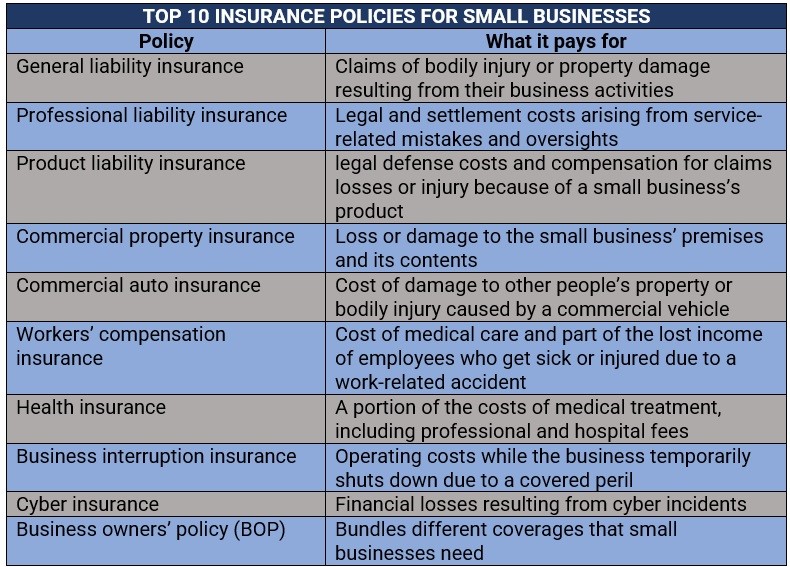
Did you know that 40% of small businesses have no insurance? That’s a massive risk. Understanding the types of insurance you need can save your business from disaster.
Let’s dive into the world of insurance policies specifically designed for small businesses. With the right coverage, you can protect your hard work from unexpected setbacks.
General Liability vs. Professional Liability Insurance
Picture this: a customer slips in your store and decides to sue. General liability insurance covers this kind of scenario. It protects against claims of bodily injury, property damage, and advertising injuries.
But what if you’re a consultant and a client claims your advice led to financial loss? Professional liability insurance is your go-to. It’s also known as errors and omissions insurance. It handles negligence claims stemming from professional services.
Here is the deal: Both policies offer vital protection, but they cater to different risks. Analyze your business to determine which is more critical—or if you need both.
Key Features of Property Insurance
If disaster struck your business location, could you recover? Property insurance steps in here. It covers the physical assets of your business: buildings, equipment, and inventory.
Imagine a fire or theft wiping out your office. Property insurance would help replace or repair lost assets, minimizing downtime. BUT, it’s crucial to understand the specifics of your policy. Some natural disasters might require additional coverage.
| Insurance Type | Coverage | Benefits | Limitations |
|---|---|---|---|
| General Liability | Bodily injury, property damage, advertising injury | Broad coverage; protects against common risks | Excludes professional errors; limited to physical incidents |
| Professional Liability | Negligence, errors, omissions in professional services | Covers financial losses due to service mistakes | Doesn’t cover physical injuries or damages |
| Property Insurance | Buildings, equipment, inventory against fire, theft | Asset protection; helps ensure business continuity | May exclude certain natural disasters |
Pro Tip: Always read the fine print and discuss with an insurance agent to tailor the perfect policy for your business needs.
Selecting the Right Insurance for Your Small Business
Did you know that 40% of small businesses never reopen after a disaster? That’s a sobering statistic. But here is the deal: the right insurance policy can be a lifesaver when things go south.
Choosing the right insurance isn’t about picking the first plan you find. It’s about strategically selecting policies that safeguard your business. Step #1 is understanding your specific needs.
Understanding Your Business Needs
Every business has unique risks. A tech startup doesn’t need the same insurance as a bakery. So, assess your business operations to identify potential risks. Ask yourself: What could go wrong? This forms the basis of your insurance needs.
Pro Tip: Start by listing all your business assets, and think about what could happen if each one was compromised.
Evaluating Insurance Providers
Not all insurers are created equal. Some have stellar reputations, while others…not so much. So, research is key. Look for providers with good reviews from businesses similar to yours. Check their financial strength because the last thing you want is an insurer that can’t pay up when disaster strikes.
Here are a few factors to consider when evaluating providers:
- Customer Service: Do they offer 24/7 support?
- Claims Process: Is it straightforward or a bureaucratic nightmare?
- Policy Flexibility: Can you tailor the plan to your specific needs?
Decision-Making Framework for Selecting Business Insurance
Now that you have a shortlist of providers, it’s time to decide. Use this framework to make an informed choice:
- Identify Core Needs: What must be insured without question?
- Compare Policies: Look at terms, coverage limits, and exclusions.
- Evaluate Costs: Make sure it fits your budget but don’t skimp on coverage.
- Consider Policy Bundling: Often, bundling different insurances can save you money.
- Review Periodically: Your needs may change, so review your policy annually.
Cost of Small Business Insurance
How much are you paying for small business insurance? It might surprise you to learn that costs can vary dramatically based on a few key factors.
Understanding how insurers calculate premiums can help you manage these costs and ensure you’re not overpaying. Here’s the deal: the price you pay is influenced by several elements, from the industry you’re in to the type of coverage you need.
How Insurance Premiums Are Calculated
Insurance companies use a combination of risk assessment and coverage specifics to determine your premium. Essentially, the more risk your business presents, the higher your premium will be.
For example, a construction company will typically pay more than a consulting firm due to the inherent risks involved in their operations. Insurers will also look at your claims history, the size of your business, and sometimes even your personal credit score.
Factors Affecting the Cost of Small Business Insurance
The main factors that can affect your premium include your business location, the number of employees, and the types of insurance policies you choose. A business in a high-crime area might pay more for property insurance than one in a safer neighborhood.
You should also consider your deductibles. A higher deductible can lower your premiums, but it means more out-of-pocket expenses if you ever need to file a claim.
Pro Tip: Always review and adjust your coverage annually. Business changes over time, and so should your insurance policies.
Methods for Reducing Insurance Costs Without Sacrificing Coverage
Reducing your insurance costs doesn’t have to mean cutting corners on coverage. Here’s how you can maintain adequate protection while saving money:
- Shop around and compare quotes from different insurers.
- Bundle multiple policies with the same insurer to earn discounts.
- Implement safety programs to reduce risk and potentially lower premiums.
Comparing Insurance Costs for Different Business Types and Coverage Levels
Check out the table below for a comparison of insurance costs across various industries and coverage levels:
| Business Type | Basic Coverage | Comprehensive Coverage |
|---|---|---|
| Restaurant | $1,200/year | $3,500/year |
| Retail Store | $800/year | $2,800/year |
| Consulting Firm | $500/year | $1,500/year |
| Construction Company | $2,000/year | $5,000/year |
Claims Process for Small Business Insurance
Did you know that only 40% of small businesses have filed an insurance claim? Filing a claim might seem daunting, but understanding the process can save you time and stress.
Here’s the deal: knowing the steps involved can significantly streamline your claims experience. Whether it’s property damage or a liability claim, handling it efficiently is key to your business’s recovery.
Steps to File a Small Business Insurance Claim
When disaster strikes, having a step-by-step plan is crucial. Step #1: Contact your insurance provider immediately to report the incident. You’ll want to have your policy number handy.
Step #2: Document everything. Take photos, gather receipts, and note any interactions related to the incident. The more evidence you have, the stronger your claim.
Step #3: Fill out the claim forms provided by your insurer. This is where your detailed documentation will come in handy. Make sure every section is completed accurately.
Step #4: Stay in touch with your claims adjuster. They’re your guide through the process and will help assess the scope of the damage or loss.
Step #5: Review the claim settlement offer carefully. If everything looks good, accept it. If not, negotiate or ask for clarification.
Pro Tip: Keep a dedicated folder (physical or digital) for all insurance-related documents. This makes retrieval quick and stress-free.
Checklist of Information for Submitting an Insurance Claim
Before you start your claim, gather this crucial info:
- Policy Number: Essential for identifying your coverage.
- Date and Time of Incident: When did it happen?
- Detailed Description: What occurred and what was affected?
- Contact Information: For anyone involved, like affected parties or witnesses.
- Supporting Documentation: Think photos, receipts, and any relevant correspondence.
Best Practices for Efficient Claims Handling
Speed is your ally. Report incidents to your insurer promptly to avoid delays. Stay organized and keep a timeline of all actions taken. Also, communicate clearly and regularly with your insurance adjuster.
But don’t just take my word for it. Successful claims come from being proactive and prepared. Applying these best practices can make a world of difference.
Example of a Successful Insurance Claim Process
Imagine a small retail store hit by a sudden flood. Here’s how they handled it:
They immediately reported the damage to their insurer and documented the aftermath with photos. With a well-organized claim form and supporting documents, they worked closely with their adjuster.
The result? The claim was approved swiftly, and the business received a settlement that covered all repair costs and lost inventory. Quick action and thorough documentation turned potential disaster into a recovery success story.
Emerging Trends in Small Business Insurance
Did you know that 40% of small businesses are uninsured, even as new risks emerge? It’s time to look at how small business insurance is evolving.
The landscape of small business insurance is changing fast. From the influence of groundbreaking technology to the rise of eco-friendly policies, it’s a whole new world for small business owners. Let’s dive into the trends that are reshaping the industry.
Tech-Driven Insurance Solutions
Technology is not just a buzzword—it’s the backbone of new insurance solutions. Insurtech companies are leveraging AI and big data to offer personalized policies that fit your business like a glove. Imagine using a chatbot to adjust your coverage in real-time as your business evolves. Pretty cool, right?
Pro Tip: Embrace insurtech to streamline your policy management and claim processes, saving you time and money.
New Insurance Products for Emerging Business Models
Gone are the days of one-size-fits-all policies. With the gig economy and remote work models booming, insurers are crafting specialized policies that cater to freelancers and digital nomads. These new products are designed to provide flexible coverage for non-traditional work environments.
The Role of Sustainability in Insurance Policies
Sustainability isn’t just for marketing—it’s shaping the future of insurance policies too. Insurers are increasingly offering incentives for businesses that adopt eco-friendly practices. This could mean lower premiums for businesses that reduce their carbon footprint or utilize renewable energy sources.
These emerging trends suggest that the insurance industry is not just reacting to change but leading it. By staying informed, you can make sure your small business is covered for the future. Don’t just follow the pack—lead the way with a forward-thinking insurance strategy.
Closure

As we wrap up our exploration into small business insurance, it’s clear that safeguarding your venture is not just about ticking boxes—it’s about strategically positioning your business for resilience and success. The right insurance coverage acts as a safety net, allowing you to focus on growing your business with confidence. Remember, the key to mastering small business insurance is understanding your specific needs, researching thoroughly, and choosing wisely. Here’s to a future where your business is not only protected but also empowered to reach new heights!
Frequently Asked Questions
What is the primary purpose of small business insurance?
Small business insurance is designed to protect businesses from financial losses due to unforeseen events such as accidents, lawsuits, and natural disasters.
How does general liability insurance differ from professional liability insurance?
General liability insurance covers physical injuries and property damage, while professional liability insurance protects against claims related to professional errors or negligence.
What are the key features of property insurance for small businesses?
Property insurance for small businesses covers physical assets like buildings and equipment against risks such as fire, theft, and vandalism.
What factors should I consider when selecting an insurance policy for my small business?
Consider factors like your business type, potential risks, coverage needs, and budget when selecting an insurance policy.
How can I reduce the cost of small business insurance?
You can reduce insurance costs by bundling policies, increasing deductibles, and implementing risk management strategies.